
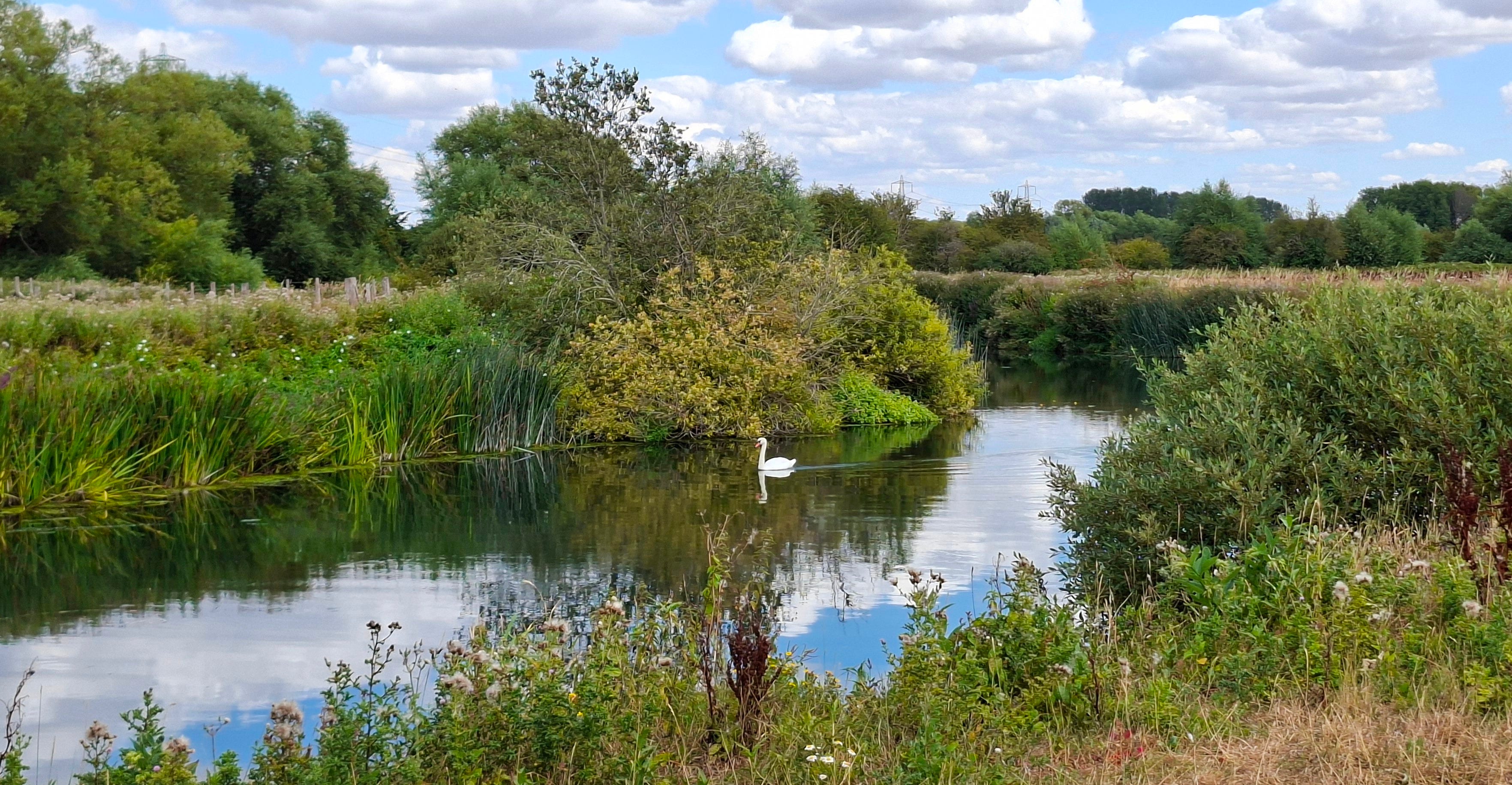
A river rarely flows in a straight line
Rivers, in many ways, feel like extraordinary feats of natural engineering.
They meander, veer and shift. Their course responding continuously to the landscape and conditions around them. Geology, gradient, profile, sediment, flow, volume – all influencing where the water goes.
Following the Thames Path this year has given me a rather different appreciation of distance and directness. Places that appear remarkably close on the map can remain several miles away when the river decides to take the scenic route. Yet, what may look like a convoluted and circuitous route, is the result of a complex and interconnected system responding directly to the conditions it encounters.
Subscribe now
It turns out that we have repeatedly tried to straighten and constrain rivers in pursuit of greater control and efficiency. Sometimes discovering that changing one part of a rather complex system creates consequences elsewhere.
We seem to have an almost instinctive preference for straightening things.
When faced with something complex, we tend to try and find the most direct route between where we are and where we want to be.
We bring much of this same instinct to the way we design and manage projects.
The illusion of straight lines
We often begin planning projects “as the crow flies”. The most direct route to get us from where we are to where we want to be.
Now on paper, this is perfectly logical. It just makes sense. We establish the current state, define the intended outcome, and create a beautiful map to get us there. We agree the timelines, milestones and activities.
However, none of us are crows.
The original project plan is often created at the point at which we know the least about what the project will uncover. Then, as the project generates new information, we continue to judge overall progress against the original plan.
So, what happens when the reality we encounter doesn’t match the assumptions we built into the plan? What assumptions are hiding inside the straight lines that we have drawn?
If we constrain ourselves to merely following the plan, without building in flexibility, we risk removing a valuable step that, in the long run, will impact on the effectiveness of the project.
Sometimes, yes, this does mean revisiting previous assumptions.
Going back over something, asking another question, or even changing the strategic approach. It can look inefficient, but if we haven’t properly investigated the point between where we are now and where we want to be, how do we even know that we are resolving the right part of the equation?
Knowing when to go with the flow
We all want to be able to fast-track success. That too, is an instinctive preference of ours.
Find shortcuts, hidden tricks.
What we struggle with, is understanding – or rather accepting – that learning, takes longer than we allow or plan for. We expect to learn as projects progress and we uncover more detail. But at the same time, we are also incredibly reluctant to let that learning change the plan.
There can be a considerable gap between the capability an organisation needs and the capability it has today. That desired end state may require behaviours, processes or confidence that doesn’t exist yet. That takes time.
Pace, as a result, will undoubtedly vary. Some stages will move quickly because the foundation is already there. Others will require more development, thinking and change management.
Therein lies the challenge. Not simply knowing how quickly we can move. Understanding where we can accelerate, and where by doing so, we potentially bypass something we still need to learn, build or resolve.
Transformation can be fast-tracked. But you cannot shortcut learning, capability or readiness without longer-term unintended consequences.
If you’re trying to make marketing more effective in your business (not just more active), subscribe to follow along.
Following the route that gets us there
Progress isn’t always visible in the project plan.
We often measure the efficiency of a transformation project by how closely it follows the original timeline. Perhaps, as leaders, we should pay more attention to whether the decisions we make along the way improve the likelihood of the transformation lasting.
We need to be able to recognise the difference between maintaining momentum, accelerating progress, and skipping what needs to happen.
Perhaps the bends in the river are a useful reminder that the most direct route is not always the most effective. Navigating the conditions we meet along the way matter just as much as reaching the destination.
Which leaves us with a different question.
Is the route we are taking leaving the business better able to sustain the change we are trying to create?
Along the Thames Path. Where the most direct route is rarely the one the river takes. Photo: Melanie Le Sage, 2026
How marketing is understood rather than delivered is a theme I explore often. If that resonates, subscribe to follow along.
When marketing in your organisation feels busy but not effective, you are not alone. There is usually a deeper challenge in how marketing is being understood.
The Intuitive Marketing Coach is written for people trying to move beyond activity, assumptions, and box-ticking, towards something more deliberate, valued, and commercially effective. It explores a more intuitive approach to business. One grounded in better judgement, clearer thinking, and a more considered view of what marketing is actually there to do.
If you’re trying to move beyond activity and towards something more logical, intuitive, and ultimately more effective, subscribe.
People, behaviour & change
14 August 2026
5
When marketing in your organisation feels busy but not particularly effective, there is usually a deeper challenge in how marketing is being understood.
The Intuitive Marketing Coach is written for those trying to move beyond the activity, assumptions, and box-ticking, and towards something more deliberate, valued, and commercially effective. It looks to explore a more intuitive approach to business. One that is grounded in better judgement, clearer thinking, and a more considered view of what marketing is actually there to do.
So, if you’re trying to move beyond activity and towards something more logical, intuitive, and ultimately more effective, subscribe.
- Page 1
Sharing a fresh perspective every Friday.
Marketing, business and everything that influences how we think, decide and act. The Intuitive Marketing Coach explores assumptions, challenges conventional thinking and encourages more considered decisions. New article published every Friday.
